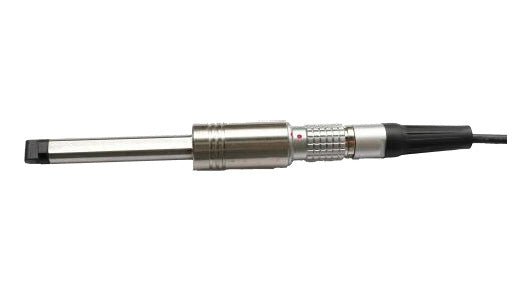
Choosing the Right BRK Probe
Probe selection affects measurement range, sensitivity and access to the test surface. Start with the exact BRK instrument model, then consider the material, expected thickness, surface geometry and operating temperature. Probes are model-specific and should not be assumed interchangeable across BRK instrument families.
Coating Thickness Probes
Select coating thickness probes according to the substrate and coating combination. Magnetic induction probes measure suitable nonmagnetic coatings on ferrous substrates such as steel. Eddy current probes measure suitable nonconductive coatings on nonferrous metal substrates such as aluminum. Confirm the probe’s measurement range, minimum substrate thickness and surface curvature requirements.
Ultrasonic Thickness Probes
Ultrasonic thickness probe selection depends on the material, wall thickness, surface condition and required resolution. Smaller contact areas can help with confined locations or curved surfaces. Frequency and probe design influence penetration and the ability to resolve thin sections. High-temperature applications require a compatible probe used within its specified temperature and contact-time limits.
Flaw Detector Probes
Straight beam, angle beam and dual crystal ultrasonic probes provide different sound paths and inspection capabilities. Select the configuration according to the inspection procedure, component geometry and expected flaw orientation. Dedicated weld and surface inspection probes should also be matched to the supported instrument, test method and application.
Leeb Hardness Tester Impact Devices
Optional impact devices allow compatible Leeb hardness testers to accommodate different workpiece sizes, surface conditions and access requirements. Check the supported impact device type, minimum workpiece mass, material thickness and surface preparation requirements before testing.
Compatibility and Calibration
Confirm the probe model, connector and instrument support before ordering. After connecting or changing a probe, follow the instrument’s instructions for setup, zero adjustment and calibration using suitable reference standards. A matching connector alone does not establish compatibility.